

The trap of introversion
I’m lonely, AI daddy, exploit me!

When I was a small person, with fewer years behind me, I loved to be alone. You could say I was overwhelmed by other people, that I was shy, that I preferred one on one time – usually you could me find sitting alone on the carpeted floor sorting thousands of teeny tiny glass beads while listening to an audiobook on my cassette player. Often, the people I meet in my adult life can hardly believe that I am the same person who used to hide behind my mother’s velvety red-brown patterned skirt, clutching the edges. I am obviously, to them, at ease in a crowd. I see friends and neighbors on the city streets and I always say hello, showing the great delight I feel at the serendipity that we should meet here and now in this way on this crosswalk or passing this bar or at this show (cue Paul Rudd meme). Others, who see me on a different day, say they notice the fear in my eyes before, during, and after any large party or gathering and especially after a long day of socializing at work.
So, what am I? What are you? Define yourself (so I can sell you things…)! A date once pulled out her computer at Bethesda fountain for me to take an online personality quiz because I didn’t know which number I was, in… was it numerology? Correct me if there are other numbers-based personality tests that I can remember to be irritated by, by name.
There is a social divide between self-identified “introvert” and “extrovert,” despite the absurdity and racist origins of most personality typing, people become attached to their labels, and even think themselves superior (or inferior) because of the qualities of those identities. Introverts like to say that they are smarter, that they read more, that they are more observant. Extroverts like to say that they are more socially competent, with leadership qualities, and that they are inherently more charismatic (and even that they are hotter). There are the inversions of these qualities, the downsides that folks may discover, but I won’t get into that (you can worry on your own or with a therapist about your inability to be alone, or your desperation to foster meaningful community).
The trouble I find with identifying some quality as innate or inherent to a person (let alone binary) is that… people change over the course of a life. We learn how to do things. A friend of mine and I were discussing how overwhelming we sometimes find New York, and the subways in particular. When we first began to use the subways again after the initial surge of COVID precautions the noise in the subway tunnels was overwhelming.
“How had we been able to ignore how brutally loud the squeaking was?? How had we not simply dropped dead from it??”
We would say as our entire bodies convulsed with discomfort at the bone chilling shrieking metal on metal friction. And then, we had to take the subway again. And we had to go to work, in person, in a service capacity!! And we had to talk to people. We had to perform sociability on hard until it became easier. I feel pretty lucky that I didn’t have to opt into sociality of my own volition, because from what I hear it’s very hard to prioritize as a skill lately.
I talk to a metric shitton of people per day at work, even at a relatively tiny place. As a bartender I am ostensibly a pretty cheap on demand a public use therapist who also doles out an extremely unhelpful drug for coping, and which often results in people just repeating their woes and getting nowhere. I feel conflicted about this role, given that I know and like my regulars, one of them has even become so dear to me that everyone in my life knows his name. I have coworkers I love, and I somehow give off a vibe that invites people to ask me for directions in public. I had a therapist once suggest that I might have an easier time walking through life if I “made less eye contact,” but for someone who enjoys clowning I think I have siloed that into a perfectly weird outlet. I say hello to strangers in coffee shops and I do small talk on the street. One of the things I love most about living in a big city is how many people I have come to know in the routines of each day; the two night-doormen who know me by name and I know them because they watch me walk home every night, my regulars, the fellow actors in the audition waiting room, the folks who consistently show up to the clown shows, the guy whose name I don’t know but always smiles over his computer at me in the backyard of my local coffee shop. Sociability, it seems to me, is both a muscle to work on (which I am fortunate my day job forces me to maintain) and a runway to expansive and enjoyable connection which actually requires less effort than it first seems. And, despite all this chitty chatting and the genuine pleasure I get from it, I would still not classify myself “an extrovert”… though I might be justifiably accused of being a shameless platonic flirt.
Through all this chit chatting I do I am noticing a dearth of charm. Sometimes I think it’s fear, anxiety, disgust at the other, a lack of social awareness as to who and when people are open to connection. People repeat the aphorism “no one owes you anything” … when in reality we owe each other everything, and that everything also includes knowing when to have a little chat and when to leave someone alone (know when to hold em, know when to fold em, know when to walk away – as in poker so in public life). Lately, I’ve found it notable when someone is charming, when they have the practiced skill of creating a game or an inside joke with a stranger. Bartenders make great practice for flirtation, and I think its part of the job to create a safe space to practice flirtation in (nothing is gonna happen here but try out your best work and I’ll give you a grade before your date or before you give someone your number, I may even be your wing man, or prevent you from humiliation – you can call me lube, social lube).
More concerningly than this anecdotal charm drought (none of you guys don’t worry, you’re so funny and charming I’m laughing just thinking about it) I’ve been seeing accounts of people (usually teenagers) on the internet saying that they are hopelessly asocial, that they cannot imagine talking to other people. That they are so terrible socially anxious, shy, traumatized by “lockdown” (to be clear the United States did not experience a lock down, yet people confuse the first spring of the pandemic as a lockdown because more people were being cautious by choice and some cities changed rules for how businesses could run). They seem determined to bemoan their inevitable loneliness. I can’t lie, I see it, I see how socially anxious people are, and I see that there are lots of contributing factors to it. I see people struggling to communicate at all with strangers, and even with people they know well.
Mark Zuckerberg recently said something along the lines of “people on average have 3 friends and have a demand for 15, this is what gen AI can fill in” immediately resulting in memes justifiably calling this ridiculous “I have 3 eggs but the recipes demand 15 eggs, so here are 12 pictures of eggs”. An ad has been filling the NYC subway system called “friend” in which a little AI device sits around your neck and responds to everything in your life… ew yuck wtf. Obviously, they are being graffitied because this is a grotesque invasion of privacy barely masked as a product. A huge theft of personal and public data, and just in general a weird grift on the loneliness epidemic not to mention a horrifying indication of our increasing cultural tolerance to giving away every piece of our lives (and the lives of every person we pass, consent much?!) to tech companies. If you are curious to think more about how the hell we got here, I highly recommend Shoshana Zuboff’s book Surveillance Capitalism.
Our loneliness is profitable. Our stagnancy makes us vulnerable to predation. Individualism is a scourge, and that is a hill I will endlessly play on (I refuse to die on it, only to dance in the shit and fling it at the fascists). So, even when it seems hard, even when it feels like the most terrifying thing in the world, how do we maintain connection?
One might think it is not sociable, or that it prevents connection to wear a kn95 or an n95 mask. I wear one every day at work to protect my health as well as the health of my coworkers and guests. Obviously (given that it’s a bar) my guests are not masked, and so I have to overcome the potential social awkwardness of them asking me why or feeling alienated because they want to see my face. So many people, and my peer bartenders especially, say that they can’t wear masks because they get worse tips, or they do not connect with the customers as easily etc. I went a week without masking during a particularly low rate of covid period in the summer of 2023 (? I think?) and honestly, the experience was not that different. I don’t doubt it would be harder at another bar but I have been fortunate. I have a pair of regulars who are doctors from out of town, they come in every few months to go shopping at cartier and to get shnockered at my bar and gossip, I love them. They told me once that they didn’t even notice I wore a mask until another guest asked about it1.
The muscle of sociality, of community, even of seemingly stupid small talk is well worth flexing even for those of us whose cups are also filled in the quiet hours alone. It might save you and your loved ones from being surveilled by an extractivist AI company who will sell you out the nearest fascist dictator for any deviance.
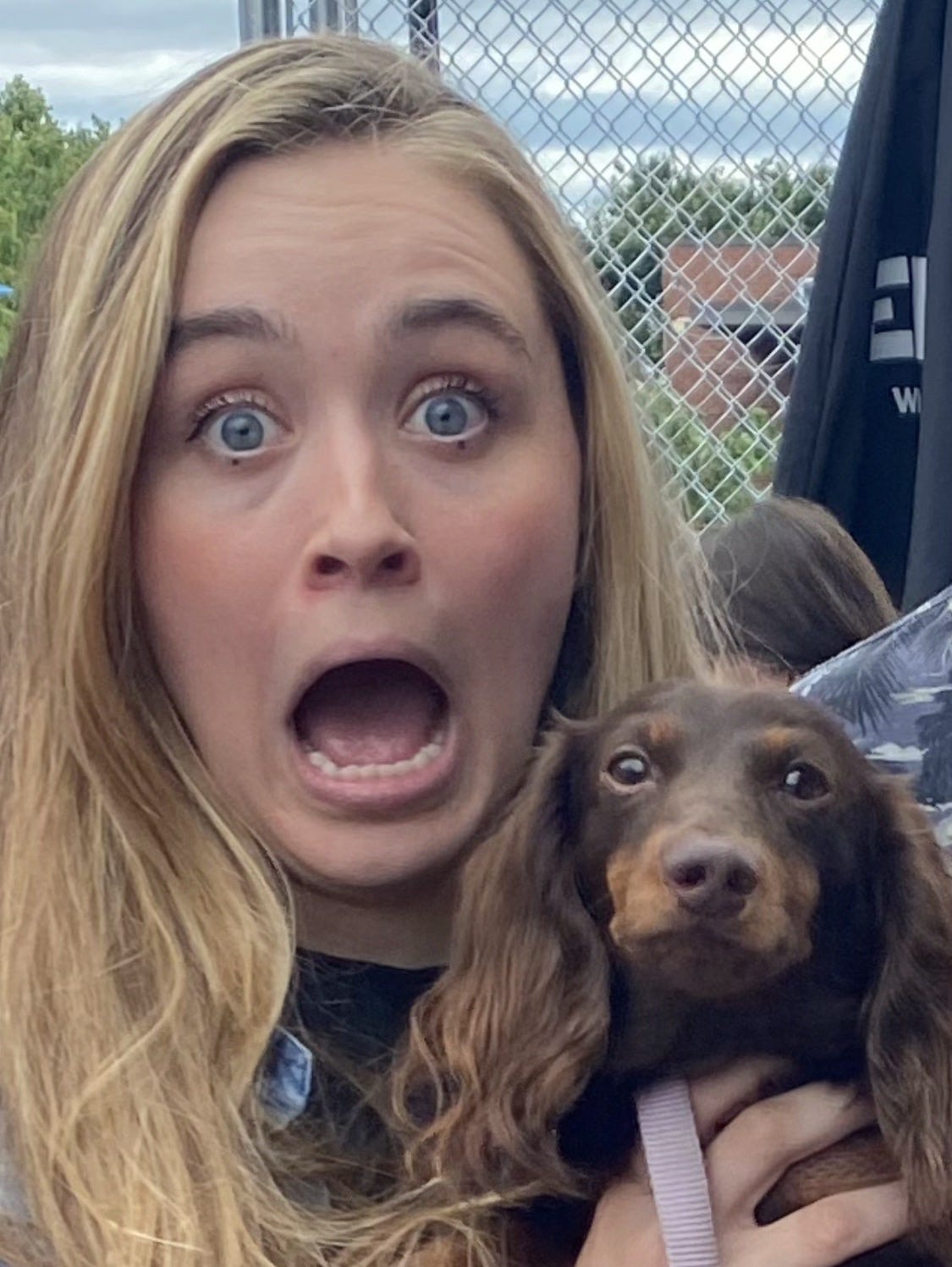
Flirt on cuties ;) Walter certainly will be
That said I have also had some extremely violently anti-social wealthy individuals yell at me for wearing a mask, but that doesn’t deter me!!! I will remain both goofy as hell and covering my face to prevent viral transmission at work!
Another awesome commentary, Sarah.
The world of "Shredded" has arrived. It's so hard for dystopian authors to outpace current events.
ur sweet, thoughtful, clever, always delivering. im feeling rusty at flirting and missing bartending.